
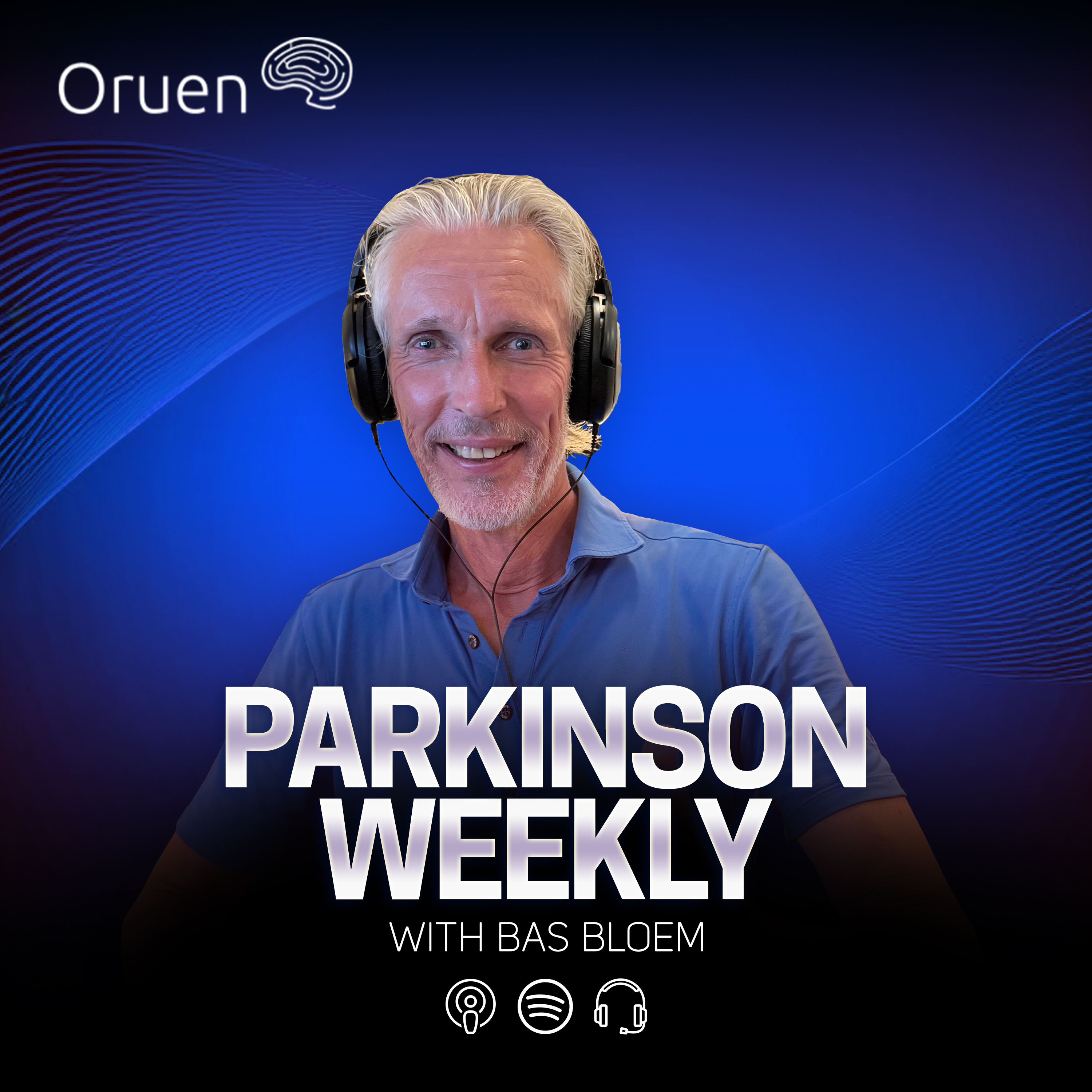
🎙️ We’re back with episode 30 of Parkinson Weekly, hosted by Prof. Bas Bloem.
In Episode 30, Prof. Bas Bloem explores orthostatic hypotension — the significant drop in blood pressure that can occur when standing up, commonly affecting people with Parkinson’s disease and multiple system atrophy. This debilitating condition can lead to fainting, falls, fatigue, and the so-called “twilight zone” of brain fog.
The episode discusses new research published this week in NPJ Parkinson’s Disease investigating “heads-up tilt sleeping” — sleeping with the bed elevated at an angle — as a simple, non-pharmacological treatment approach. Prof. Bloem explains how this technique may help improve both daytime blood pressure drops and nighttime hypertension, potentially offering a rare treatment strategy that addresses both problems simultaneously.
Drawing on findings from the international HEADS-UP Parkinson study, the episode examines the science behind this old clinical observation, practical ways patients can try the intervention themselves, and why this could represent an important advance in managing autonomic dysfunction in Parkinson’s disease.
You can read the full article here: https://pubmed.ncbi.nlm.nih.gov/42143029/
And don’t forget, you can listen here:
Amazon Music: https://music.amazon.co.uk/podcasts/34ec09bc-c8b8-4a28-a12b-ca8aae3edd57/parkinson-weekly?ref=dm_sh_BpcE171Aj6Bvc6jQNKL90yl8o
Spotify: https://open.spotify.com/show/5FVqV671ESQ5VxbncsIxIS?si=a29cb8d5e72640de
Apple: https://podcasts.apple.com/gb/podcast/parkinson-weekly/id1836115672
Have a question you’d like Bas to answer in a future episode? Email us at parkinsonweekly@gmail.com – we’d love to hear from you.
0 Comments